Choosing Stone Without Guesswork
A field guide for choosing stone by use, edge, finish, movement, and maintenance instead of first-impression drama.
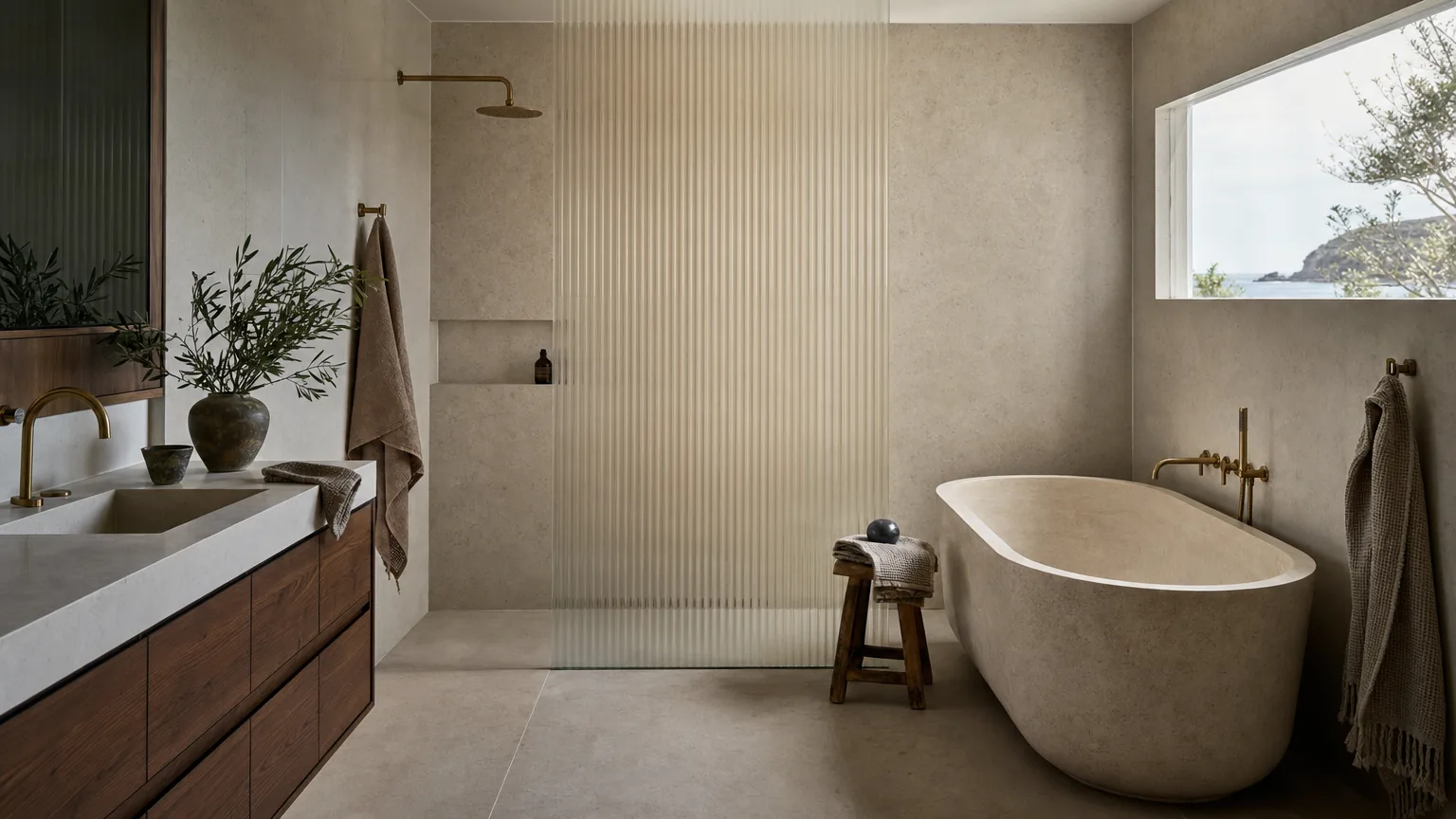
Stone is easy to overbuy and easy to underthink. The slab yard rewards drama. The room rewards use, scale, and a clear idea of how the surface should age.
Start with the job
Choose the stone after naming what it must do. A kitchen counter works harder than a powder room vanity. A shower curb takes more standing water than a bath wall. A fireplace surround carries heat, shadow, and furniture around it.
The job decides the material family before color does. Some limestones feel beautiful under hand and behave poorly around acid. Some marbles mark quickly but make sense where the owner accepts patina. Quartzite may suit a kitchen that needs more resistance, but the specific slab still needs testing.
Look at finish before color
Polished, honed, leathered, brushed, and tumbled finishes change the same stone into different surfaces. A polished slab can look formal and show glare. A honed surface can feel calmer and mark sooner. A textured finish can hide wear but collect residue in a busy kitchen.
Bring the finish into the decision early. If the room needs softness, a quieter finish may matter more than finding a warmer stone. If the room has low natural light, a dead-flat surface may flatten it further.
Read the edge as architecture
Edges decide whether stone feels heavy, thin, old, sharp, or relaxed. A thick mitered counter can make a kitchen feel built-in and permanent. A softened eased edge can keep a bath vanity from feeling precious. A rounded edge may suit a family bath better than a crisp profile that chips under daily use.
Ask to see edge samples at real thickness. A drawing line cannot show how the hand will meet the stone.
Decide where movement belongs
Strong veining needs a place to land. If movement runs through every counter, niche, sill, and backsplash, the room can lose its rest. If movement appears once, in the right place, it can hold the room without taking it over.
Use active stone where the architecture gives it enough space: a long vanity, a full-height backsplash, a fireplace, a shower wall with few interruptions. Use quieter stone where the room already has many lines, doors, fixtures, or small planes.
Ask how the stone fails
Every stone has a failure mode. It can etch, stain, chip, absorb, crack along a vein, or show water marks. Ask the supplier and fabricator the uncomfortable questions before the client falls in love with the slab.
Put lemon juice, oil, coffee, and water on a sample if the stone will see those things. Leave them long enough to matter. Wipe them, then look in side light. The answer may still be yes, but it should be an informed yes.
Pair it with quieter neighbors
Stone rarely fails alone. It fails because everything around it competes. Cabinet color, wall finish, metal tone, tile scale, and mirror shape all press against it.
Once the stone is chosen, reduce the number of voices nearby. A strong stone may need painted cabinetry, simple hardware, and a wall color with less yellow in it. A quiet stone may welcome timber, woven texture, or a stronger metal.
Approve the actual slab
Samples are useful for direction. Slabs are the decision. Photograph the full slab straight on, mark the cut areas, and confirm where seams, sink cutouts, and veining will fall.
The goal is not perfection. The goal is no surprise at install. Stone should arrive with its character already accepted, its weaknesses understood, and its neighbors quiet enough to let it work.